
Beyond Listening Blog Series: Making Meaning in Seasons of Change
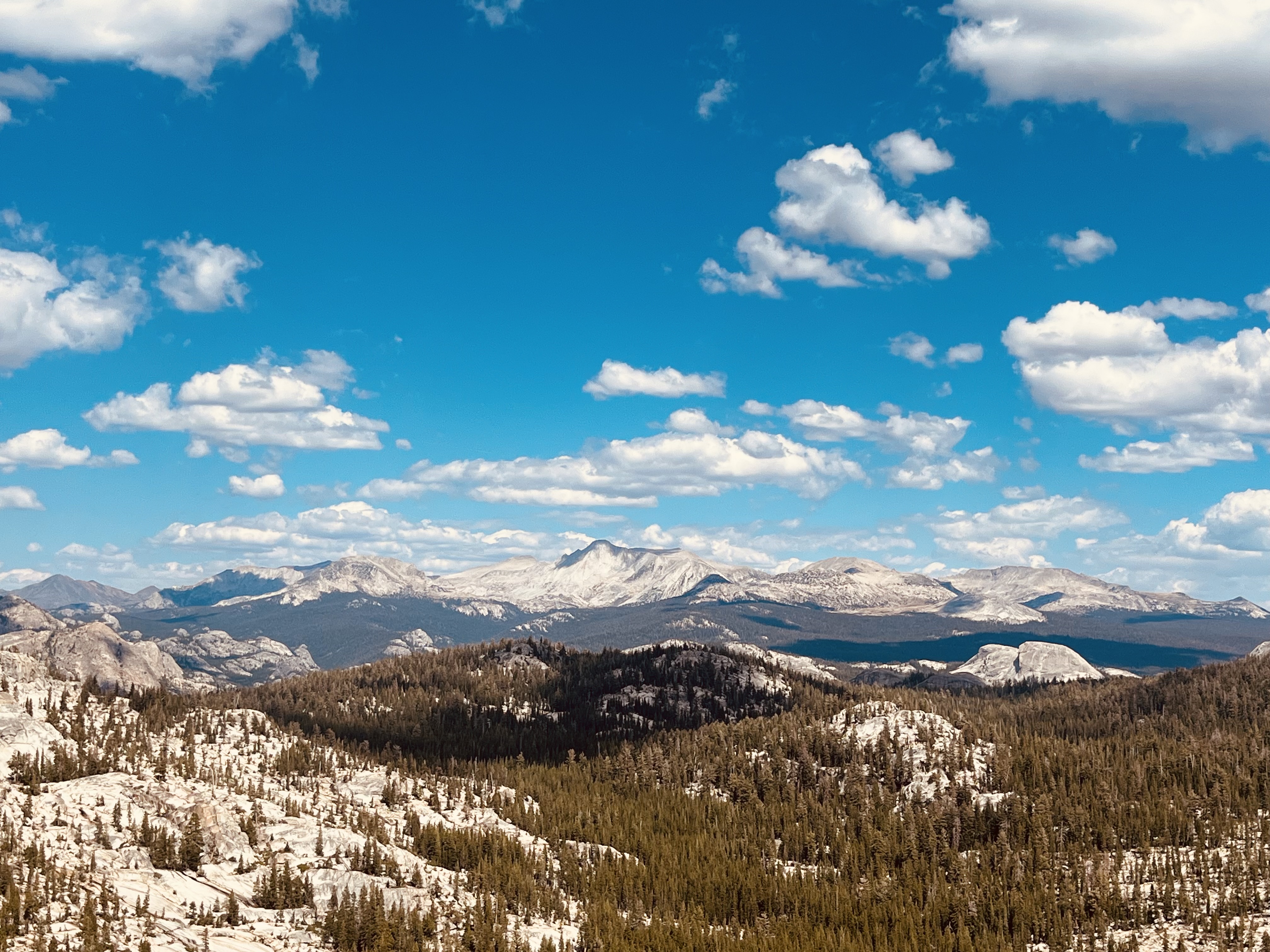
In my life, I have often tried to orient myself to the decisions in front of me by looking ahead.
In my twenties, I spent time with people in their thirties, asking about work, purpose, and how they were shaping their lives- what mattered, what endured, and what they wished they had known. Many of their reflections pointed to a shift: from choosing things for status to a deeper understanding of what actually suited them and the life they wanted to live.
In my thirties, I turned to those in their forties and fifties. There, I heard stories of accolades and achievements that, over time, felt empty beside relationships that could not be replaced. Again and again, I heard some version of the same truth: that time with those you love cannot be deferred, and what is neglected there carries a cost that is difficult to repair later.
Now, in my fifties, my conversations have shifted again. With people in their sixties, seventies, and eighties, the focus turns toward health, care, and the cultivation of the discipline and curiosity required to sustain a life over time.
Over the years, I have learnt that these conversations have given me a sense of the landscape, but not a map. No matter how much I try to prepare, I cannot fully know my journey through these phases until I am inside them. Each threshold brings something that cannot be understood in advance, only lived into.
While much of what we have been taught suggests that life unfolds in a sequence and that we move from one stage to the next, building clarity as we go - in lived experience, that linearity rarely holds. What becomes visible instead is a different kind of movement: cyclical, layered, and often contradictory.
We find ourselves moving forward in one area of life while something else is quietly falling away. Returning to familiar questions, but from a different vantage point.
Maps can orient us. They offer patterns, language, and systems of understanding. But they are always partial because they are static. In periods of real transformation, personally and collectively, the territory begins to shift and what once guided us stops working. The maps no longer align with what is actually unfolding.
At that point, orientation requires something else. Not a better map, at least not immediately, but a deeper capacity to read the terrain and a new way of making sense of it. One of the ways we can begin to do this is by paying attention to the seasons: not as a neat progression, but as an ecological pattern that reveals the nature of the change we are in.
In the natural world, seasons are not goals to be achieved. They are conditions to be lived within. Each carries its own rhythm, demands, and form of intelligence.
There are times of emergence, where something new is just beginning to take hold. Times of fullness, where energy is outward, visible, and generative. Times of release, where something is being asked to end, whether we are ready or not. And times of dormancy, where little appears to be happening, yet something essential, including what has died, is reforming and reorganizing beneath the surface.
Layered into the cycles of days and seasons is the way we, as adults, change how we make sense of things.
The work of Robert Kegan and Lisa Lahey in developmental psychology helps us understand adulthood not as a fixed state, but as a slower-moving current of inner change. Our capacity to make meaning continues to evolve: not just through accumulation, but through shifts in our axis mundi - the centre of gravity from which we make sense of life. These developmental movements are not linear or predictable. They unfold over years, often through periods of confusion, frustration, or loss. The way we have been making sense of things stops working, but a new way has not yet fully formed.
Wisdom traditions often meet these periods of transition through different practices and perspectives. Across cultures and religions, they describe stages of life that involve not just growth, but reorientation: moving from dependence on external authority, to the formation of an inner knowing, and eventually toward a deeper attunement to something that cannot be fully controlled or defined.
At that point, the task is no longer simply to assert our own direction. It is to listen more carefully to movement and to what is emerging. The task becomes noticing the subtle shifts in ourselves and our environment and moving with them before we fully understand them. The questions centre less on what we think should happen and more on what these moments are asking of us.
These transitions are often discovered and explored through somatic practices such as meditation, the whirling dervishes, contemplative prayer, pranayama, speaking in tongues, or rites like that used by Open Circle of going into the wilderness to fast to find and mark the transforming of old wounds into gifts. These practices invite altered states of consciousness and a relationship with the parts of life that exist beyond our mental models of understanding.
This is where the play between map and territory becomes most alive. The deeper we move into this type of transformation, the less any map can fully orient us. Instead, we begin to rely on something more subtle: an ongoing dialogue between our inner instincts and the reality of what is unfolding around us.
This dynamic is not only individual. It is present in our collective transitions as well.
With global media, it is difficult to miss that across societies and cultures many of the maps that have guided us—social norms, institutional structures, and shared narratives—are no longer working. It is confusing and creates tension. Some respond by trying to reinforce the old maps, doubling down on certainty. Others move quickly to create new ones, often before the territory is fully understood. But both responses can miss something essential.
From a distance, many of our quick defences and interpretations look less like certainty and more like a nervous response to the unknown territory we are being asked to enter. The noise and panic that arise when our definitions lose their efficacy can stop us listening beyond the words and asking deeper questions about how we are changing. There can be an avoidance of the messiness of complexity, the grey areas where things can not be easily solved or resolved, where the way forward pushes us beyond the frameworks we have relied upon.
The work, then, is not simply to replace one map with another or argue about which one is right. The work is to deepen our collective capacity to notice what is happening beneath the surface; to include multiple perspectives without searching for justice and without sweeping the tension under the carpet. Instead the work becomes staying in relationship to the uncomfortable or contradictory truths they point to, not simply to tolerate ambiguity, but to welcome it.
This requires the discipline of "turning into the skid" individually and collectively, turning towards the tension when systems stop working for us or our larger identity of who we are is caught in a web of shifting narratives
There is much to learn here from land-based cultures whose survival depended upon the capacity to listen collectively to subtle changes in the environment and make sense of them. Cultures that, in the West, have too often been ignored, disrespected, or destroyed. If approached with respect and an openness to change the way we know, learn and make decisions, these traditions can offer wisdom, perspective, and living examples of different ways of relating to one another and the earth. Not as answers to be appropriated or idealised, but as invitations to rebalance.
Our collective practice across cultures, may be to cltivate relationship across difference and to stay curious about multiple ways of knowing truth. We might seek instead of rushing towards achievement to instead develop a greater sensitivity to the subtleties of transition, both individually and collectively. To sense when something is ending, even if we would prefer it not to. To notice when something new is emerging, even when it is not yet clear. To act when the moment calls for action, and to wait when it does not. And in society, to find ways of balancing communion with agency.
The new maps, in this sense, may emerge through our navigation of mapping changes as we experience them.
Individually, this may mean learning to trust our own capacity to orient—not by forcing clarity, but by listening more deeply. Collectively, it may mean putting our energy and resources into creating the conditions where we can make sense of what is happening together, rather than defaulting to premature certainty or fragmentation on where we should go.
In my work with Open Circle over the years, I have observed that when people make sense of things together, they become more capable of living with uncertainty and a shared narrative emerges that is large enough to include divergence. The way forward begins to take shape through the ongoing relationship between differences, less as a vision held by a leader at the front, and more as a collective movement with the spirit and hope of that movement at its centre.
My hope is then that we become better able to recognize the moments of revelation that arise between us, and the possibilities they invite into the world.
Send me the latest blog post

More posts
Beyond Listening Series: The Thin Line Between Collective Wisdom and Collective Folly

Beyond Listening Series: Agency and Communion

Beyond Listening Series: Sharpening the Blade — Seeing the World at the Edges

Stay in Touch
Sign-up for the Open Circle newsletter to receive updates on upcoming classes, events, and much more.


